Posts Categories
Latest Posts
- “Climate Crisis Becoming Security Threat in Liberia”…Director Yarkpawolo tells UN March 27, 2026
- Liberia Validates First National Report on Nagoya Protocol as EPA Calls for Fair Benefit Sharing February 18, 2026
- Liberia Teams Up with UK University in High-Stakes Push to Map Mangroves, Fight Pollution February 10, 2026
- EPA Announces New Measures to Protect Liberia’s Wetlands February 3, 2026
- The Environmental Protection Agency (EPA), through the Climate Information Systems (CIS) Project, has launched a training and validation program to empower women as Climate Ambassadors and members of Disaster Management Committees. January 28, 2026
Liberia Calls for International Support to Implement National Adaptation Plan
News //
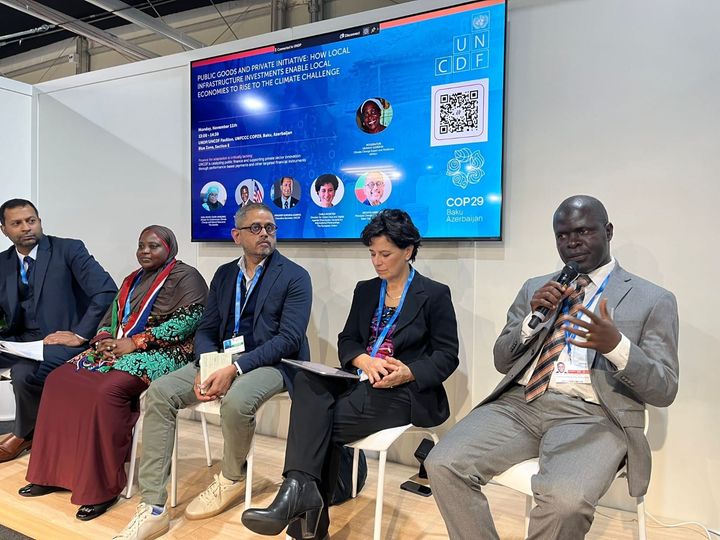
(November 11, 2024, Baku, Azerbaijan) In a pressing appeal for international assistance, Dr. Emmanuel K. Urey Yarkpawolo, Executive Director of the Environmental Protection Agency of Liberia (EPA) has urged global partners to support Liberia’s National Adaptation Plan (NAP), which aims to address the significant challenges posed by climate change.
Speaking shortly after participating in a side event organized by the United Nations Capital Development Fund (UNCDF) at COP 29 in Baku, Dr. Yarkpawolo emphasized that inadequate financing, knowledge gaps, and institutional constraints are barriers to effective adaptation, particularly in developing countries like Liberia.
The NAP, which requires approximately half a billion dollars over the next decade for full implementation, faces substantial financial hurdles. “The greatest challenge is the financial gap,” Dr. Yarkpawolo stated. “While climate change presents one of the major challenges for our country, I believe that with the help of international partners, we can align ourselves with other developing nations.
During the event titled “Public Goods and Private Initiative: How Local Infrastructure Investments Enable Local Economies to Rise to the Climate Challenge, Dr. Yarkpawolo highlighted the need for assistance, noting that many local communities cannot adapt to climate impacts without external support. He praised UNCDF’s innovative approaches, which mobilize both public and private resources through performance-based climate resilience grants, and shared that Liberia is actively experimenting with these strategies in collaboration with local county administrations.
The Environmental Protection Agency (EPA) has developed a comprehensive National Adaptation Plan for Liberia. “In August of this year, top government officials gathered under the auspices of the EPA and declared their commitment to fully implementing the NAP,” he added, highlighting the government’s dedication to climate resilience. He acknowledged that while Liberia has professionals and effective local governance laws to decentralize government activities, the need for substantial financial resources remains critical.
“We are now concluding county development agendas under the National Development Plan, referred to as the ARREST Agenda for Inclusive Development (AAID), with climate adaptation as a significant focus.” Dr. Yarkpawolo concluded with a poignant metaphor, which reflects the spirit of community and support in Liberia: “We have a saying in Liberia: if someone is washing your back — a classic example of needing help because your hands can’t reach — you should also wash your stomach, as that is within your reach. This is the collaborative spirit we embrace as we tackle the pressing challenges of climate change.”
As Liberia stands at a pivotal moment in its climate adaptation journey, the call for international partnerships is more crucial than ever in ensuring that the country can effectively respond to the challenges of climate change.