Posts Categories
Latest Posts
- EPA Teams Up with Gospel Icon Marion Cassell: Turning Gospel Hits into a Rallying Cry for a Greener Liberia November 27, 2025
- EPA Accelerates Digital Transformation with EKMS Staff Training November 26, 2025
- Liberia at COP30: Clean Mining, Strong Communities November 21, 2025
- Liberia’s EPA Endorses Belém Declaration, Deepens Cooperation with Colombia to Champion Peoples of African Descent in Climate Action November 17, 2025
- EPA and UNICEF sign Declaration on Children, Youth, and Climate Action at COP30 November 14, 2025
Liberia Showcases Climate Resilience at Africa Regional Climate Week
News //
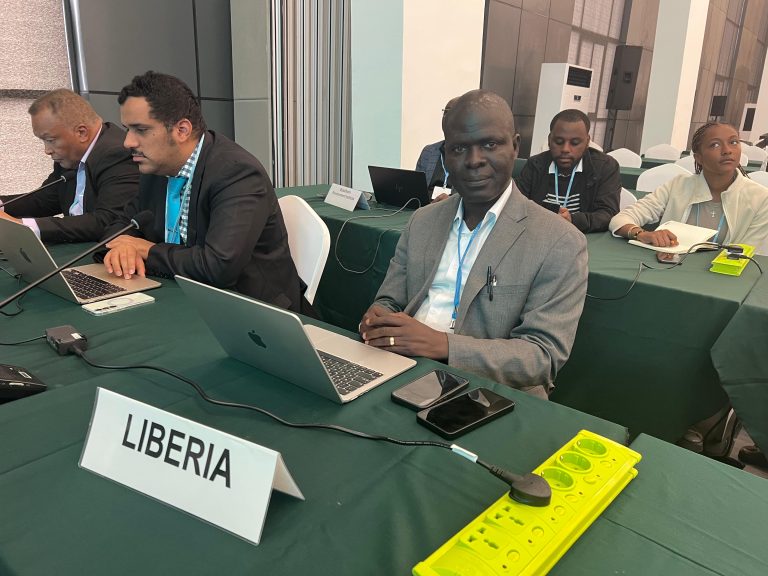
Addis Ababa, Ethiopia – September 6, 2025
At the Africa Regional Climate Week in Addis Ababa, Liberia’s Environmental Protection Agency (EPA) Executive Director, Dr. Emmanuel K. Urey Yarkpawolo, delivered a powerful message at the High-Level Ministerial Meeting on Africa’s climate challenges. Speaking at the Addis Convention Centre, he underscored Africa’s unique vulnerability to climate change, despite its negligible contribution to global emissions.
“Africa contributes least to global emissions yet suffers the most from climate change. This is not a theory—it is our lived experience,” Dr. Yarkpawolo stressed, highlighting Liberia’s reality where sea erosion is displacing communities, erratic rainfall threatens agriculture, and storms disrupt livelihoods. He emphasized that while these represent Africa’s “special circumstances and needs,” the continent is not passive—it is actively charting a path of resilience.
Dr. Yarkpawolo outlined four key solutions Liberia is advancing as part of its climate strategy. First, he pointed to carbon markets with integrity, noting Liberia is finalizing a National Carbon Market Policy and Article 6 framework to attract green investment while safeguarding transparency and equitable community benefits. Second, he spotlighted coastal and nature protection, with ongoing efforts to restore mangroves, wetlands, and launch coastal protection programs to shield people, ecosystems, and the blue economy.
Third, he stressed the importance of law enforcement with just transitions, citing Liberia’s actions against illegal mining and mercury pollution under its Environmental Protection and Management Law, while ensuring communities find sustainable alternatives. Finally, he highlighted clean energy for resilience, including the rollout of Liberia’s new Net Metering Policy, which pilots solar systems in public facilities to maintain essential services during extreme weather events.
Looking ahead, Dr. Yarkpawolo reaffirmed Liberia’s ambitious Nationally Determined Contribution (NDC), which targets up to a 64% emissions reduction—conditional on international support. He called on global partners to capitalize the Loss and Damage Fund for rapid relief, deliver predictable grant-based adaptation finance accessible to African institutions, and support both the Tropical Forest Forever Facility (TFFF) and Africa’s readiness for transparent carbon markets.
“Africa is not defined by vulnerability—we are proving resilience,” he concluded. “By investing in the systems we are building, from Liberia to the continent, you invest in a safer climate future for all.”